Getting Married in Spring 2026: Complete Guide with Checklist, Costs and Venue Ideas
Everything you need to know to get married in spring 2026: from realistic planning and costs to the most beautiful venues and Dutch rules for outdoor ceremonies.
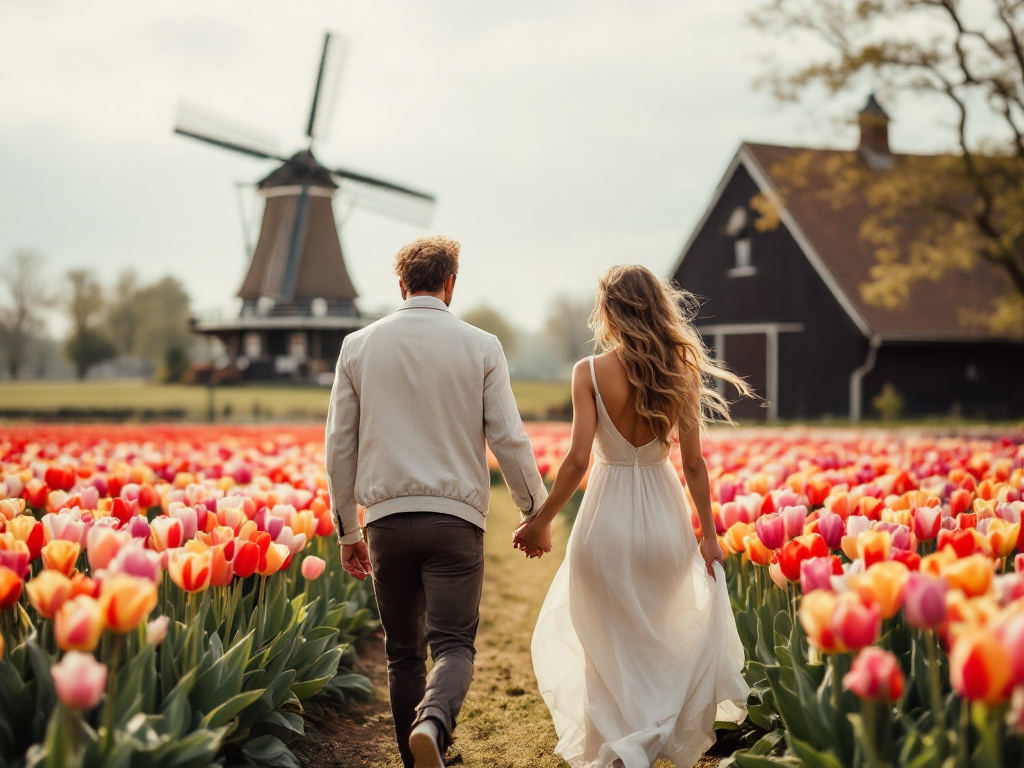
Getting married in spring is a dream for many couples: nature is in full bloom, the weather is mild, and the days are getting longer. But how do you organise a stress-free spring wedding in 2026? In this complete guide, you’ll find a realistic checklist, cost indications, venue inspiration, and practical tips tailored for couples planning a wedding in the Netherlands. This way, you can plan with confidence and enjoy your big day to the fullest.
Why get married in spring?
Spring is one of the most popular seasons for weddings in the Netherlands, and for good reason:
- Weather: Temperatures average between 10 and 20 degrees Celsius, perfect for outdoor photos and ceremonies. Rain is always a risk, but with a solid backup plan (like a covered venue or marquee), it’s manageable.
- Nature: Fields of flowers, green forests, and blooming trees provide stunning, natural decoration. Think of tulip fields in the Noordoostpolder, cherry blossoms in the Betuwe, or the dunes of Texel.
- Light: Days are getting longer, giving you more time for daylight photos. A ceremony at 4:00 PM, for example, still means plenty of sunlight for your portraits.
- Availability: Many venues and vendors are still available in spring, especially if you book early (9-12 months in advance).
However, a spring wedding does require extra attention to seasonal challenges, such as pollen allergies, unpredictable weather, and planning around Easter or May holidays (when venues may be busier).
Getting married in spring 2026: a realistic timeline
Below is a timeline to help you plan your spring wedding in 2026, including deadlines for key tasks. This schedule is based on a wedding between March and May 2026.
12-18 months in advance (summer/autumn 2024)
- Book your venue: Popular spring wedding venues (like estates, botanical gardens, or beach pavilions) often book up a year in advance. Start visiting and comparing options. Use our checklist for visiting wedding venues to ensure you don’t forget anything.
- Set your budget: Spring weddings can be more expensive due to seasonal decor (like flowers) and potential extra costs for a rain plan. Use our article on what a wedding costs in 2026 as a guideline and adjust it to your wishes.
- Choose your master of ceremonies: This person will help you with planning and coordinate the day itself. Read here about choosing the right master of ceremonies.
9-12 months in advance (autumn/winter 2024-2025)
- Book vendors: Think of a wedding photographer, caterer, florist, and musicians. These are often busier in spring, so book early. Use our tips for choosing the right wedding photographer.
- Order wedding attire: Having a wedding dress or suit made takes an average of 6-9 months. Start trying on and ordering in time. Read here about finding the perfect wedding dress.
- Design invitations: Choose a style that fits your spring theme (e.g., pastel colours, floral motifs, or minimalist design). Also, think about the wording for your wedding invitation.
6-9 months in advance (winter 2025)
- Plan your menu: Opt for seasonal dishes like asparagus, strawberries, rhubarb, or lamb. Discuss with your caterer which ingredients will be available in spring and what the costs are.
- Plan your decor: Spring weddings are perfect for floral decor. Think of arrangements with tulips, daffodils, peonies, or wildflowers. Discuss with your florist which flowers will be available in spring and what the prices are (e.g., €500-€1,500 for an average wedding).
- Arrange a rain plan: For outdoor ceremonies or parties, a rain plan is essential. Discuss with your venue if there’s a covered space available, or rent a marquee (costs: €1,000-€3,000).
3-6 months in advance (autumn 2025 - spring 2026)
- Arrange your officiant: If you want a free ceremony (outside the registry office), you’ll need to hire your own officiant. This costs an average of €500-€1,200. Check with your municipality for the rules on outdoor locations.
- Finalise your guest list: Send invitations at least 3 months in advance so guests have time to respond and travel if needed.
- Arrange transport: Think of a wedding car, minibus for guests, or bicycles (popular in the Netherlands!). Rental costs for a wedding car range from €200-€600.
1-3 months in advance (spring 2026)
- Create a day schedule: Work with your master of ceremonies and venue to create a realistic timeline. Allow extra time for photos in nature and potential weather delays.
- Tasting and final fitting: Schedule a tasting with your caterer and a final fitting for your wedding attire.
- Speeches and music: Discuss with your master of ceremonies and musicians how the day will look musically. Read here for tips on giving a wedding speech.
1 month in advance (February/March 2026)
- Final details: Think of wedding rings, wedding cake, guest book, and any allergies your guests might have (e.g., hay fever).
- Check weather forecasts: Keep an eye on the weather and adjust your plans if needed. For example, move an outdoor ceremony indoors if heavy rain is predicted.
- Relax: Enjoy the preparations and trust your planning!
Costs of a spring wedding in 2026
The costs of a spring wedding can be higher than in other seasons, especially due to seasonal decor and potential extra costs for a rain plan. Below is an average cost indication for a wedding with 80-100 guests in 2026. Use this as a guideline and adjust it to your wishes.
| Item | Average Costs (2026) |
|---|---|
| Venue | €2,500 - €6,000 |
| Catering | €4,000 - €8,000 |
| Wedding photographer | €1,500 - €3,000 |
| Florist | €500 - €1,500 |
| Wedding attire | €1,500 - €4,000 |
| Officiant (free ceremony) | €500 - €1,200 |
| Music (DJ/band) | €800 - €2,000 |
| Decor and styling | €500 - €2,000 |
| Wedding cake | €300 - €800 |
| Transport (wedding car/bus) | €200 - €600 |
| Invitations and stationery | €200 - €600 |
| Marquee (if needed) | €1,000 - €3,000 |
| Miscellaneous (guest book, wedding rings, etc.) | €500 - €1,500 |
| Total | €14,000 - €35,000 |
Tips to save on your spring wedding
- Choose seasonal flowers: Tulips, daffodils, and peonies are cheaper in spring than imported flowers. Discuss with your florist which flowers are available at that time.
- Rent a venue with built-in decor: Some venues (like estates or castles) already have beautiful, seasonal decor, so you’ll spend less on extra styling.
- Opt for a daytime wedding: A daytime wedding is often cheaper than an evening party. Think of a high tea, brunch, or lunch instead of a dinner.
- Use natural decor: Take advantage of the natural surroundings (e.g., blooming trees or fields) for your photos and decor. This saves costs and looks stunning.
Read more about smart ways to save on your wedding.
The most beautiful wedding venues for a spring wedding in the Netherlands
Spring is the perfect season to get married at a venue with lots of nature, flowers, or water. Below is inspiration for your spring wedding, organised by region. All venues are suitable for both the ceremony and the party, unless stated otherwise.
North Holland
- Landgoed Duin & Kruidberg (Santpoort): A historic estate surrounded by dunes and forests. Perfect for a romantic spring wedding with lots of greenery and flowers. Capacity: 120-200 guests. Costs: €3,500-€6,000.
- De Slotplaats (Laren): A charming wedding venue with a beautiful garden full of flowers and a covered terrace. Ideal for an intimate wedding. Capacity: 50-120 guests. Costs: €2,500-€4,500.
- Strandpaviljoen Tijn Akersloot (Castricum): For couples dreaming of a beach wedding in spring. Keep a rain plan in mind. Capacity: 80-150 guests. Costs: €2,000-€4,000.
South Holland
- Kasteel De Wittenburg (Wassenaar): A fairytale castle with a beautiful garden, perfect for a spring wedding. Capacity: 100-250 guests. Costs: €4,000-€7,000.
- Landgoed Clingendael (The Hague): A historic venue with a Japanese garden and flower fields. Suitable for both the ceremony and the party. Capacity: 100-200 guests. Costs: €3,000-€5,500.
- De Kromme Watergang (Zuid-Beijerland): A unique waterfront venue surrounded by greenery and flowers. Ideal for a rustic spring wedding. Capacity: 60-120 guests. Costs: €2,500-€4,500.
Utrecht
- Kasteel De Haar (Haarzuilens): One of the most fairytale-like wedding venues in the Netherlands, with a stunning garden full of flowers. Capacity: 150-300 guests. Costs: €5,000-€9,000.
- Landgoed Zonheuvel (Doorn): An estate with a wooded setting and a covered terrace. Perfect for a natural spring wedding. Capacity: 80-200 guests. Costs: €3,000-€5,500.
- De Watertuin (Breukelen): An intimate waterfront venue surrounded by greenery and flowers. Capacity: 50-100 guests. Costs: €2,000-€4,000.
Gelderland
- Kasteel Rosendael (Rozendaal): A historic castle with a beautiful rose garden, perfect for a romantic spring wedding. Capacity: 100-200 guests. Costs: €3,500-€6,000.
- Landgoed Het Lathmer (Wilp): A rural venue with a cosy barn and a garden full of flowers. Capacity: 80-150 guests. Costs: €2,500-€4,500.
- De Scheg (Ede): A modern venue with a large garden, ideal for a contemporary spring wedding. Capacity: 100-250 guests. Costs: €3,000-€5,500.
Overijssel
- Landgoed Singraven (Denekamp): A historic estate with a beautiful garden and orangery. Perfect for a classic spring wedding. Capacity: 80-150 guests. Costs: €3,000-€5,500.
- De Wijngaard (Zwolle): A unique venue with a vineyard and a cosy barn. Ideal for a rustic wedding. Capacity: 60-120 guests. Costs: €2,000-€4,000.
- Trouwboerderij De Bongerd (Raalte): An authentic farm with a large garden, perfect for an informal spring wedding. Capacity: 50-100 guests. Costs: €1,500-€3,500.
Limburg
- Kasteel Wittem (Wittem): A romantic castle with a beautiful garden, ideal for a spring wedding. Capacity: 80-150 guests. Costs: €3,000-€5,500.
- Château St. Gerlach (Valkenburg): A luxurious estate with a French garden and orangery. Perfect for a chic wedding. Capacity: 100-200 guests. Costs: €4,000-€7,000.
- De Vossemeren (Lomm): A natural venue in the middle of the forest, ideal for an adventurous spring wedding. Capacity: 50-120 guests. Costs: €2,000-€4,000.
Dutch rules for getting married in spring
Getting married in the Netherlands means you’ll need to follow legal rules and procedures, especially if you’re planning an outdoor venue or a free ceremony. Below are the key rules for a spring wedding in 2026.
Legal requirements
- Register with the municipality: You must register your marriage at least 4 weeks in advance at the municipality where you want to get married. For a spring wedding in 2026, this means registering by February 2026 at the latest.
- Documents: Make sure you have the following documents:
- Valid IDs (passport or ID card).
- Extract from the birth register (no older than 3 months).
- Proof of registration in the Personal Records Database (BRP).
- If applicable, a divorce decree (if one of you was previously married).
- Witnesses: You’ll need at least 2 witnesses for the ceremony. These can be friends or family members.
Outdoor venues and free ceremonies
- Registry office vs. free venue: In the Netherlands, you can only legally marry at a registry office or a venue approved by the municipality. A free ceremony (e.g., in a garden, on the beach, or in a forest) is not legally binding but can be held as a symbolic ceremony.
- Officiant: For a legal ceremony, a municipal officiant is required. For a free ceremony, you can hire your own officiant (costs: €500-€1,200).
- Permit for outdoor venues: If you want to marry outdoors (e.g., on the beach or in a park), you’ll often need a permit from the municipality. Check with your municipality for the rules and costs (average: €100-€300).
- Noise pollution: Be mindful of noise regulations, especially if you want to play music outdoors. In some municipalities, a noise permit is required.
Season-specific rules
- Weather and rain plan: If you’re marrying outdoors, a rain plan is essential. Discuss with your venue what the options are (e.g., a covered space or marquee).
- Allergies: In spring, many people suffer from hay fever. Keep this in mind when choosing flowers and venues (e.g., avoid venues with lots of grass pollen).
- Easter and May holidays: Be aware that venues and vendors may be busier around Easter and the May holidays. Book early and ask about any surcharges.
Checklist: getting married in spring 2026
Use this checklist to ensure you don’t forget anything when planning your spring wedding. Tick off what you’ve already arranged and schedule the rest according to the timeline above.
12-18 months in advance
- Wedding venue booked.
- Budget set.
- Master of ceremonies chosen.
9-12 months in advance
- Wedding photographer booked.
- Caterer booked.
- Florist booked.
- Musicians/DJ booked.
- Wedding attire ordered.
- Invitations designed.
6-9 months in advance
- Menu planned.
- Decor planned.
- Rain plan arranged.
3-6 months in advance
- Officiant arranged (for free ceremony).
- Guest list finalised.
- Invitations sent.
- Transport arranged.
1-3 months in advance
- Day schedule created.
- Tasting scheduled.
- Final fitting for wedding attire.
- Speeches and music discussed.
1 month in advance
- Wedding rings bought.
- Wedding cake ordered.
- Guest book arranged.
- Guests’ allergies noted.
- Weather forecasts monitored.
Frequently asked questions
Can we get married outdoors in spring in the Netherlands?
Yes, you can! In the Netherlands, you can marry outdoors, but keep the legal rules in mind. A legal ceremony must take place at a registry office or a venue approved by the municipality. A free ceremony (non-legal) can be held anywhere, but you’ll need to hire your own officiant. Check with your municipality if a permit is required for outdoor venues and what the costs are.
What are the best flowers for a spring wedding?
Spring offers many seasonal flowers that are perfect for a wedding. Consider:
- Tulips (classic and affordable).
- Daffodils (yellow or white, cheerful and fresh).
- Peonies (romantic and lush).
- Ranunculus (soft colours and delicate petals).
- Wildflowers (natural and rustic).
Save money by choosing seasonal flowers and avoiding imported flowers like roses from Kenya or lilies from South America.
How much does a spring wedding cost on average?
The average cost of a spring wedding in 2026 ranges from €14,000 to €35,000 for 80-100 guests. This includes the venue, catering, wedding photographer, florist, wedding attire, music, and decor. Spring weddings can be more expensive due to seasonal decor (like flowers) and potential extra costs for a rain plan. Use our cost calculator to create a realistic budget.
What are the most popular dates for a spring wedding in 2026?
Popular dates for a spring wedding in 2026 include:
- Weekends in April and May: Especially the last two weekends of April and the first two weekends of May are popular.
- Good Friday (3 April 2026): A Friday in the Easter weekend, ideal for a long weekend wedding.
- King’s Day (27 April 2026): A festive day, but keep in mind that venues and vendors may be more expensive.
- May holidays (25 April - 3 May 2026): Many couples choose a wedding during the May holidays because guests are free.
Book your venue and vendors at least 12 months in advance if you want to marry on a popular date.
Can we get married on the beach in spring?
Yes, you can! Beach weddings are popular in spring, but keep the following in mind:
- Permit: For a ceremony on the beach, you’ll often need a permit from the municipality. Check with the municipality where you want to marry for the rules and costs (average: €100-€300).
- Weather: Coastal weather can be unpredictable, even in spring. Arrange a rain plan, like a beach pavilion or marquee.
- Wind: Be mindful of wind on the beach. Opt for a covered location or a time when it’s less windy (e.g., in the morning).
- Attire: Choose light, airy clothing that doesn’t blow away easily. Think of a short wedding dress, a suit with a linen shirt, or a jumpsuit.
What are the advantages of a spring wedding compared to other seasons?
A spring wedding has several advantages:
- Weather: Temperatures are mild (10-20 degrees Celsius), ideal for outdoor activities and photos.
- Nature: Nature is in bloom, giving your wedding a natural, romantic atmosphere without much extra decor.
- Availability: Venues and vendors are often still available in spring, especially if you book early.
- Light: Days are getting longer, giving you more time for daylight photos.
- Flexibility: In spring, you can choose between a daytime wedding (cheaper) or an evening party (more romantic).
A downside is that the weather can be unpredictable, so a rain plan is essential.