Giving a Wedding Speech: Tips for Witnesses, Parents and Friends
Asked to give a wedding speech? With this structure, golden rules and common mistakes, you'll stand in front of the room with confidence.
D
Written by Daan de Vos
2 min read
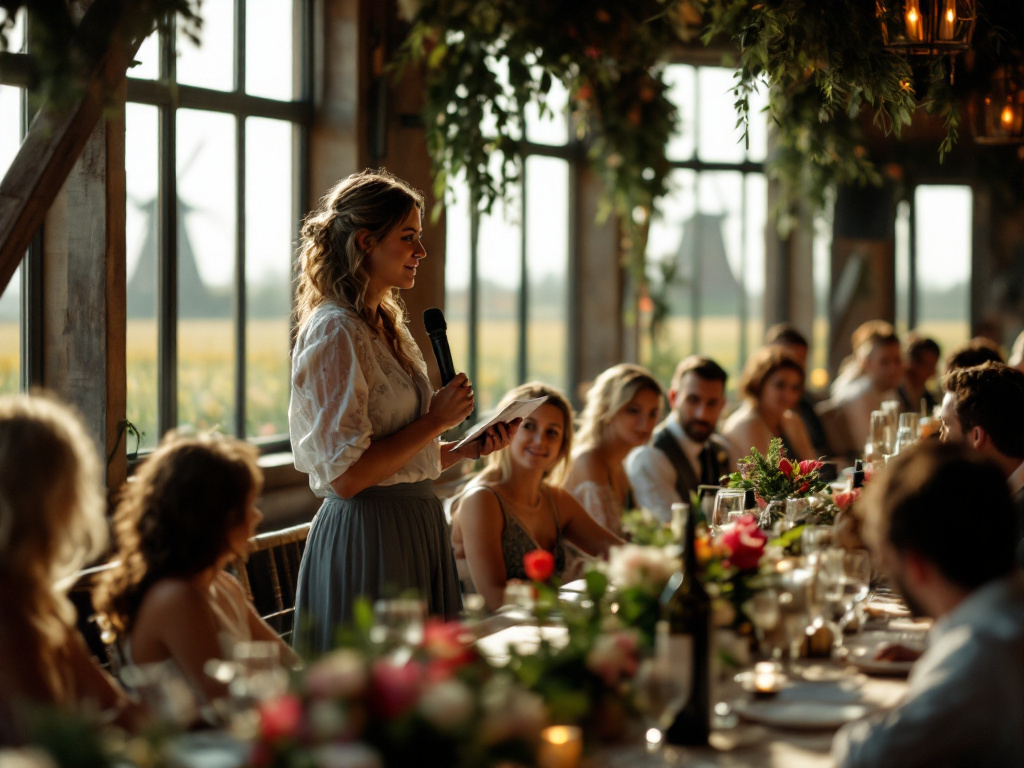
Giving a wedding speech is an honour — and for most people also slightly nerve-racking. The good news: a good wedding speech isn't a matter of talent, but of preparation.
The structure that always works
- Introduce yourself. Not everyone in the room knows you. One sentence about who you are and how you know the couple.
- Open with a smile. A light anecdote or a wink at the day itself breaks the ice — humour isn't required, warmth is.
- Tell one good story. Choose one concrete memory that says something about who the bride or groom really is. One strong story beats five loose jokes.
- Bridge to the partner. Describe what you saw change when they met each other. This is the moment the room goes soft.
- End with a toast. Short, powerful, glass raised: "To love — to [names]!"
The golden rules
- Keep it short. Five minutes is the maximum, three is often better. Write the speech out and read aloud: 500 words is about four minutes.
- Practise out loud, at least three times. Not to memorise, but so the sentences flow smoothly.
- Paper is allowed. A card with keywords looks more professional than a phone.
- Speak to the room, toast to the couple.
What not to do
- Stories about exes, drinking habits or old relationship drama — however funny they were at the bachelor party
- Inside jokes only three people understand
- Improvising "because it feels more spontaneous" — it never does
- Giving a speech after your fourth glass of wine
- Refusing the microphone: the back table wants to hear you too
For those who find it scary
Nerves are normal and the room is benevolent by definition: everyone wants you to succeed. Look at friendly faces, exhale before you start and remember — it's not about you, but about the two people next to you. That realisation takes the pressure off.